Interview


I began, like most painters, by painting reality.
Landscapes?
No. Landscapes were my grandfather’s subject. He was the one who passed on to me, as a legacy, the desire to paint. I began by painting other realities.
But your reality gradually began to change. Your paintings started to float.
Yes. I think that was a reaction to becoming aware that everything floats in space. We, too, float upon the sphere of the Earth.
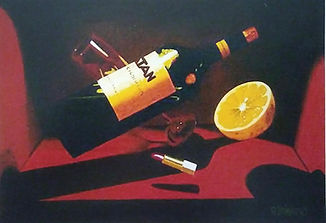


But I have also seen paintings in which the elements neither float nor seek to replicate reality.
And some of them seem to place a strong emphasis on human emotions.
Yes. Experimentation eventually led me to become fascinated—almost obsessed—with emotional expression.
Is that where your latest period began?
That’s right. Neither facial expressions nor bodily gestures convey a single emotion. Anger, for example, is always accompanied by frustration, sadness, helplessness… We cannot describe in words what someone truly feels. We need another language. Music, painting, poetry… art.
Art allows the most indescribable emotions to travel from the mind of the artist to the subconscious of the person who hears or sees the work.
My current interest is in communicating human emotions in response to different situations.

For example, what do the widows of the Capo feel when he is murdered? When they have lost the power and influence he represented?
When they are left exposed to envy and revenge?

But I have also seen characters from Greek mythology.
The characters of Greek mythology fascinate me. In them, every human emotion comes to the surface.
What does Sisyphus feel, condemned to exhausting yet utterly futile labor?
What emotions does Leda experience, in love with a swan?
And where will this period lead you? What will it ultimately become?
I don’t know. Perhaps this will be the final period.
